The ultimate flavor pairing app
for modern cooks

Do you remember playing with Legos, Lincoln Logs and action figures when you were a kid? My approach was to just dump everything on the floor and start building a world, mixing and matching the pieces as I went. There were no guidelines or rules; the only objective was to bring something new and exciting into existence.
The image of what I was building was just a glimmer of an idea at the beginning and only came into focus as I put the pieces together. The enjoyment was the imaginative process of creation, and the final result was never meant to last.
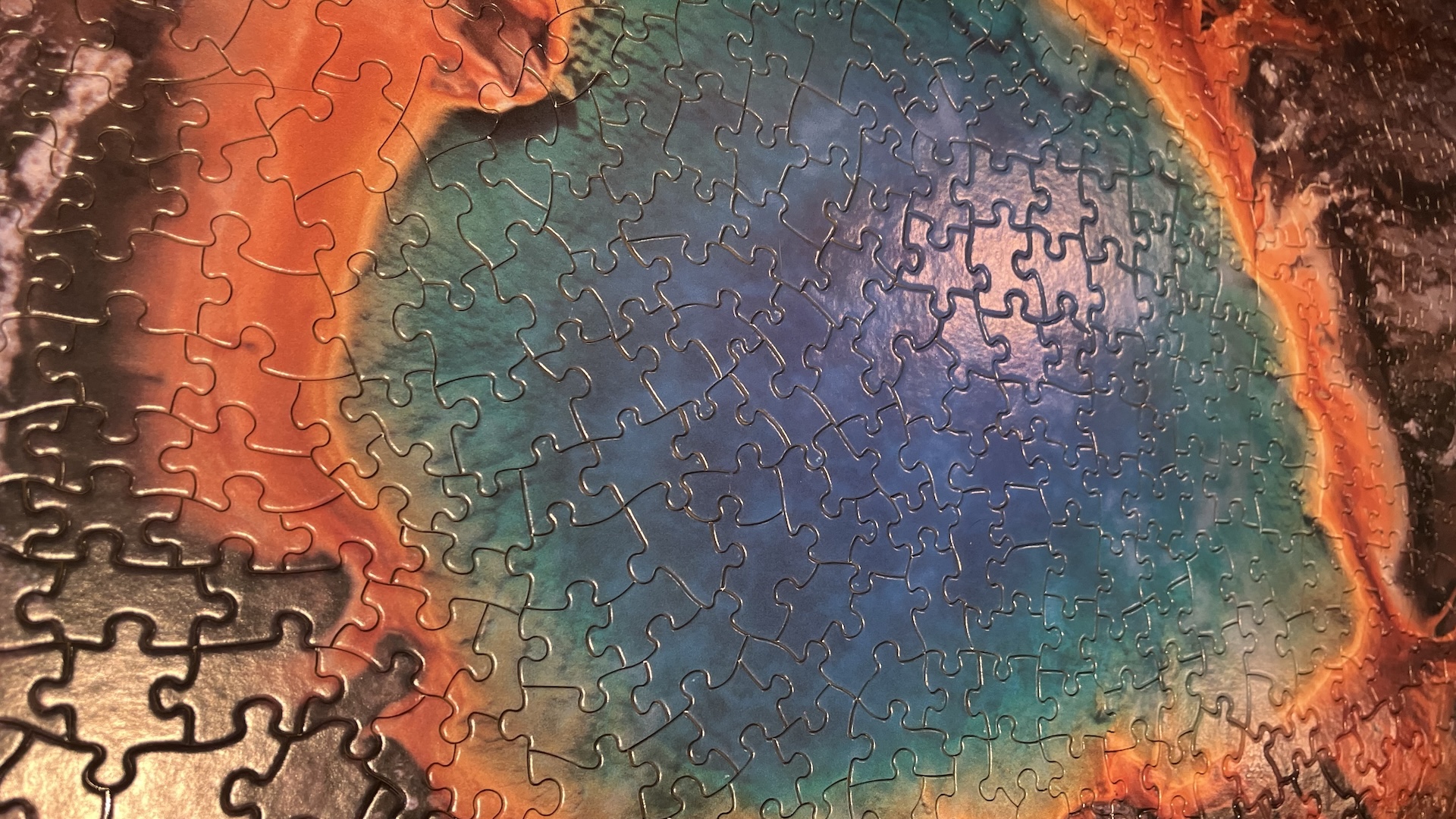
That’s how I approach cooking, and that’s the sort of creative process TasteMatch is designed to encourage. It’s like solving your own puzzle, and you get to do it every day.
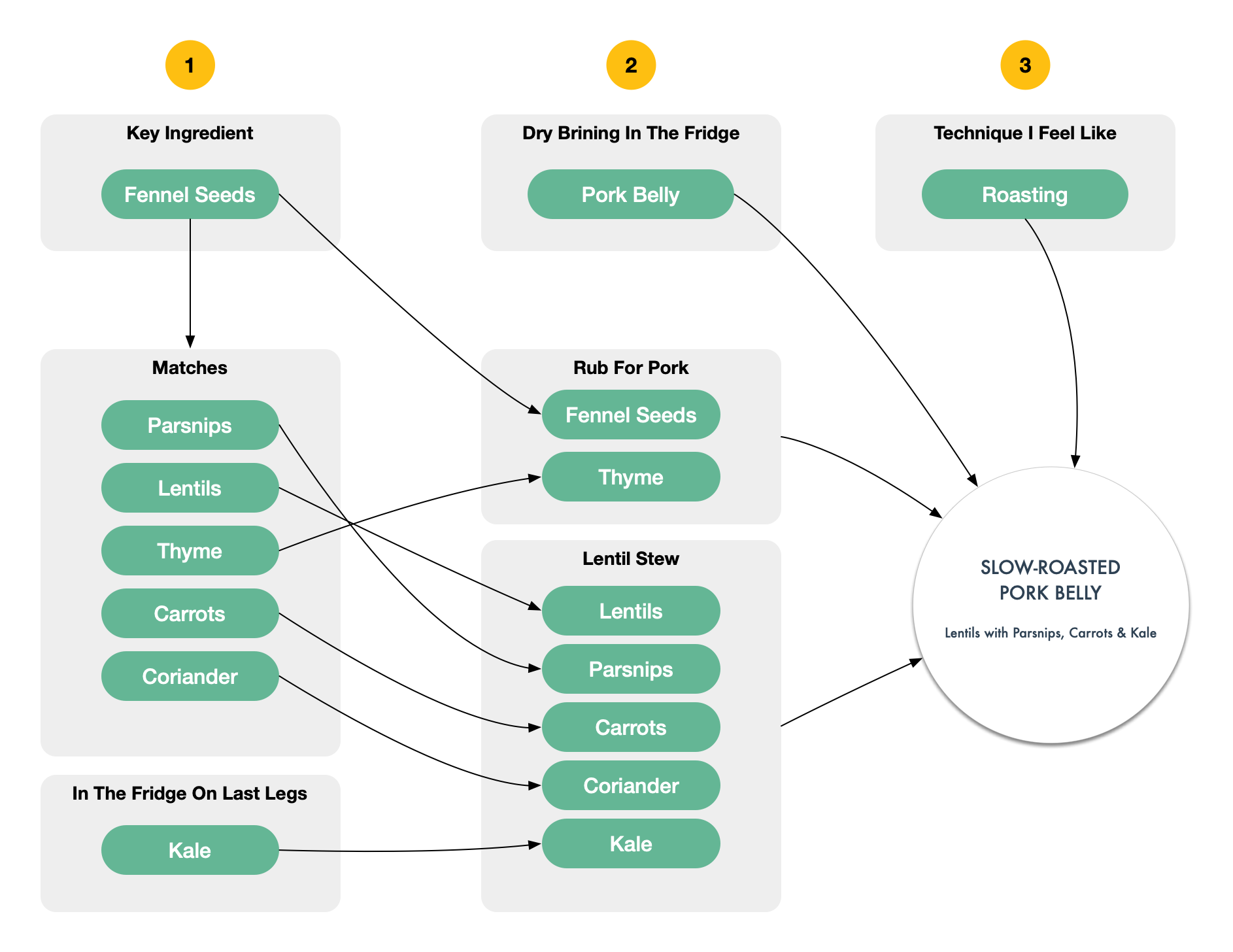
The numbers on the diagram are the key parts of the process that I want to talk about in a bit more detail because I think they’re fundamental.
1. Start with a distinctly flavored ingredient
Instead of the protein, I often use a distinctly flavored ingredient as a starting point (Fennel Seeds in this case). I’ve found this to spark more interesting ideas. We also use this approach to find new ways to use up ingredients that we have in the fridge.
2. Have protein options ready
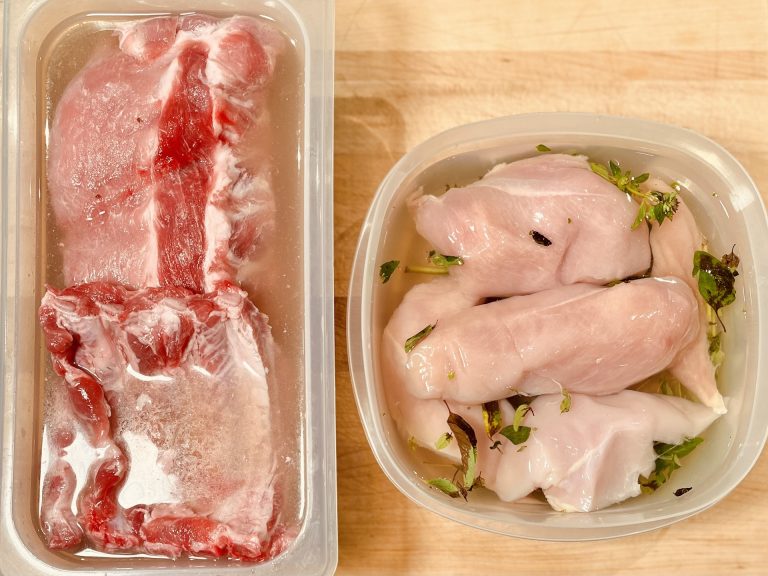
It may sound a bit decadent to have multiple protein options, but I’m talking about preparation, not excess. I’ve gotten in the habit of having multiple brines going at a time, and at the very least a few things either fresh from the market or defrosted in advance. It’s a bit like meal-prep, but just the building blocks.
3. Develop your techniques
The more cooking methods you’ve mastered, the more options you’ll have. While there are plenty of online resources, the only real way to do this is to practice. Knowing techniques will free you from following recipes and allow you to be much more spontaneous.
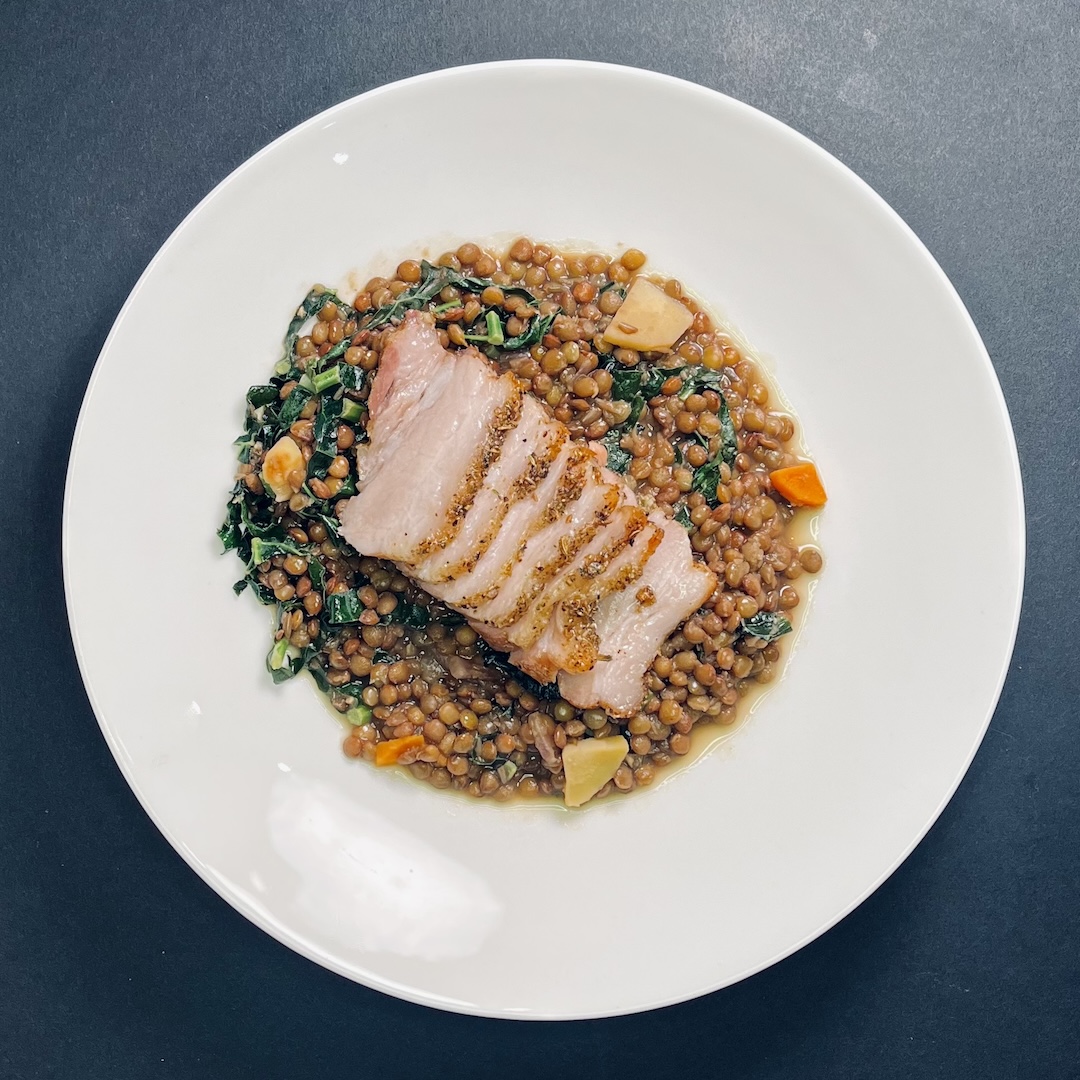
The other thing people ask is “How do you figure out what to do with the ingredients?” The answer is: “That’s what the creative process is.” There are no rules that say “use the fennel seeds and thyme for a rub, use the coriander in the lentil stew”, it’s simply an idea that popped into my head while I was looking at the matches, and I felt it would create a nice contrast in the dish.
That’s the essence of free-form cooking, or as @vivien says “The answer is within you.” And if you can’t think of anything, TasteMatch also has a really nice Chef Suggestions feature that will help you, and even full recipes that you can use as a reference to get an idea of a standard approach to a dish.
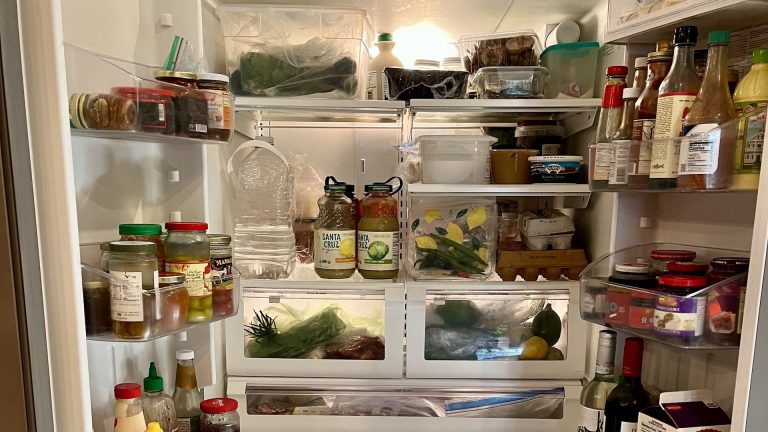
You’ll also notice that I used kale that was “in the fridge on last legs.” This is something that we’ve consciously made into a habit: making sure we use ingredients before they go bad, furthering the goal of #zerowaste. I’ll write more about this in a future post, but it’s something that TasteMatch is really good at, especially if you use your expiring ingredient as a starting point. In this case, we simply added it to the dish based on intuition and a desire for a splash of color.
Creativity and risk
I’ve had more than a few people tell me that they don’t like the risk of creative cooking. Many would prefer to simply follow a recipe to avoid that uncomfortable feeling of not having specific instructions for every step and a photo to show what something is supposed to look like. I get it…it’s like having an image on a Lego box to guide you. Cooking this way is safer, but what’s really the risk in taking a more creative approach? Will the kitchen catch on fire? Will everybody get sick? Will people laugh at you? Will you feel like a failure if something doesn’t work out?
My guess is that it’s different for everyone. I’m a risk-taker by nature so I’m rarely intimidated by the idea of jumping into something without a prescriptive plan. In fact, I intentionally avoid reading the directions when assembling furniture just to see if I can do it on my own. I enjoy the challenge of the deductive process. As for cooking, I think it’s important to understand that while the perceived risk of a creative approach may be high, the ACTUAL risk is very low. You’re cooking for people who love you, you’re not charging for the meal, and if it doesn’t work out, you have 364 more days in the year to try again. Plus, true failure (i.e., an inedible meal) is exceedingly rare. More likely, it just won’t be as good as you hoped. Is that really something to be afraid of? Think instead of the positive, that feeling of joy when you make something original and great. It’s worth the risk.
Final thoughts
The final thing I’ll say on the subject of activating your brain is to point out the benefit that creative thinking has to your mental health. When you’re exploring ideas, your mind is actively making connections, forming images, evaluating different directions and making decisions. It’s a fundamentally different process than searching for a recipe and endlessly scrolling, which is often a frustrating and unsatisfying experience. Sure, it might be “easier” and “lower risk” from a certain perspective, but you’re not really making new neural connections.
There’s a great quote in the Introduction to “Secrets of the Best Chefs” by Adam Roberts:
“In every cook’s life, there comes a moment. It’s not a moment you can anticipate, but it’s certainly one you can prepare for. It’s the moment when you stop following recipes to the letter and start cooking based on what you know.”
I believe creative cooking should be a goal for every home cook, and we built TasteMatch to be a helpful tool every step of the way.